

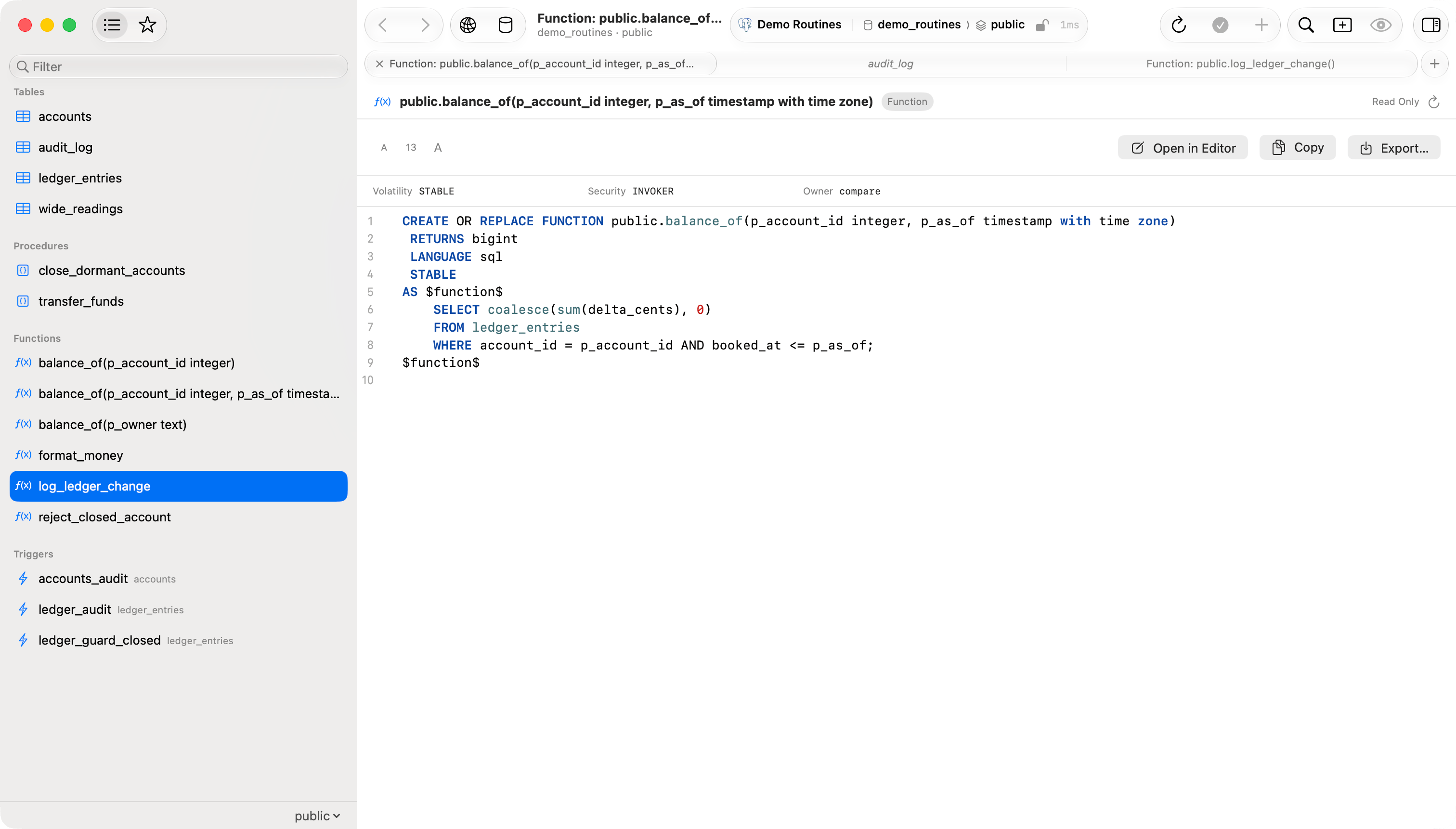
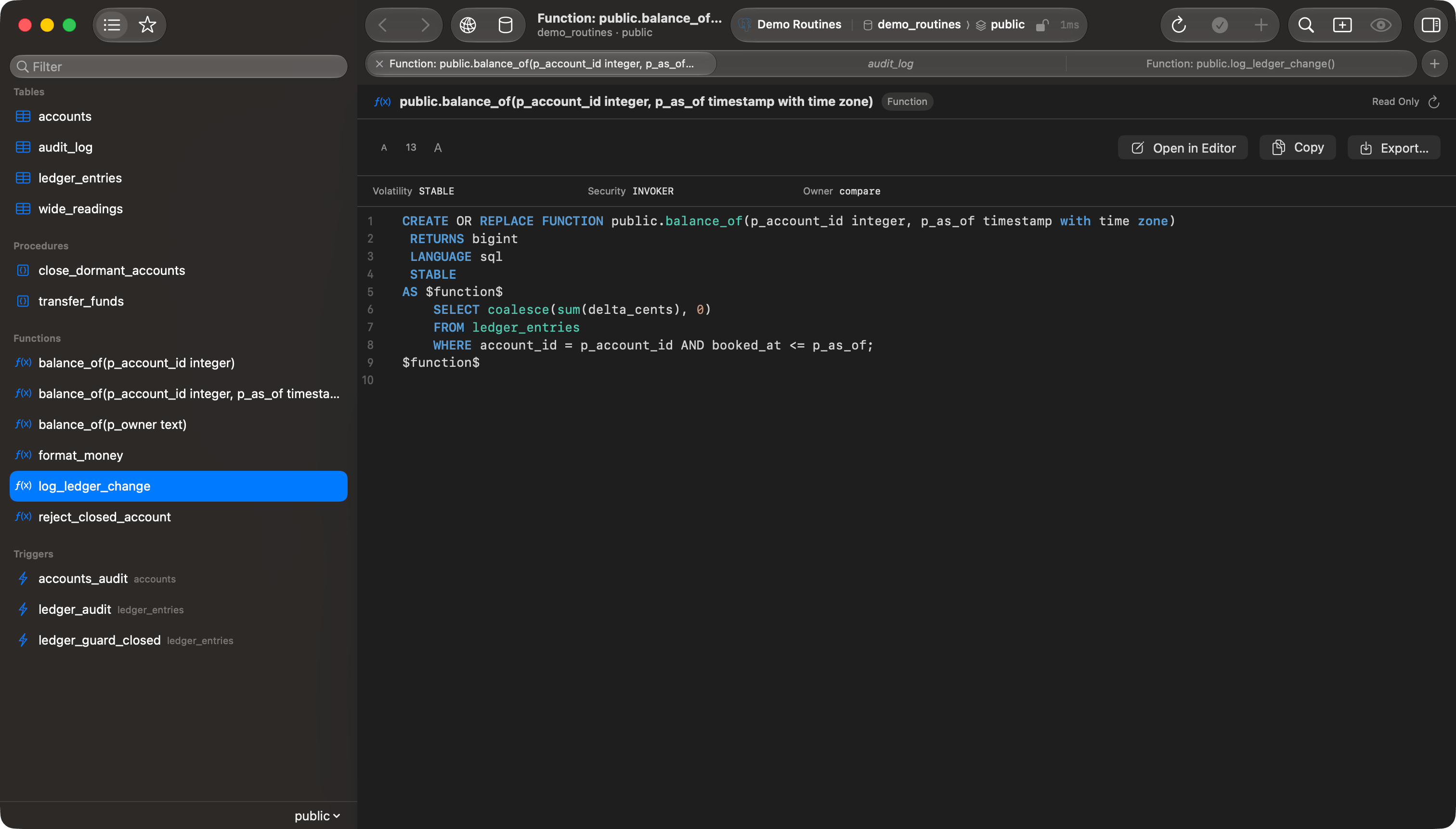
Sections under a PostgreSQL schema, with one overloaded function open
Engine support
A section appears only where the engine has that kind of object. An engine that has them and currently holds none keeps the section and shows No items inside it, so a database with no tables still lists its procedures and functions. A section whose list is still on its way shows Loading…, and one the server refused shows the error in place of its rows.
Finding a routine or trigger
A trigger row carries the table it fires for beside its name. The sidebar filter matches a trigger by its own name or by that table; type-select matches the name only. Triggers also appear on their table’s Structure tab. File > Open Quickly… (Cmd+Shift+O) indexes all three kinds alongside tables and views. Choosing one opens its source.
Overloaded names
PostgreSQL lets several functions share a name with different argument lists. Where a name repeats inside a section, every row in that group gains its arguments:transform(geometry, integer) and transform(geometry, text). A unique name stays bare. Each row opens its own definition.
Reading the source
Return or a double-click opens the selected row. Right-click offers Show DDL for the same thing, plus Copy Name and Copy with Signature.
Beside the source sit the properties the engine reports: language, return type, volatility, security, and owner for a routine; timing, events, orientation, and enabled state for a trigger. The labels are the engine’s own, so they differ between engines.
A viewer tab survives a relaunch and refetches when it reopens.
A DuckDB macro shows the expression DuckDB stored, not the
CREATE MACRO text as typed.